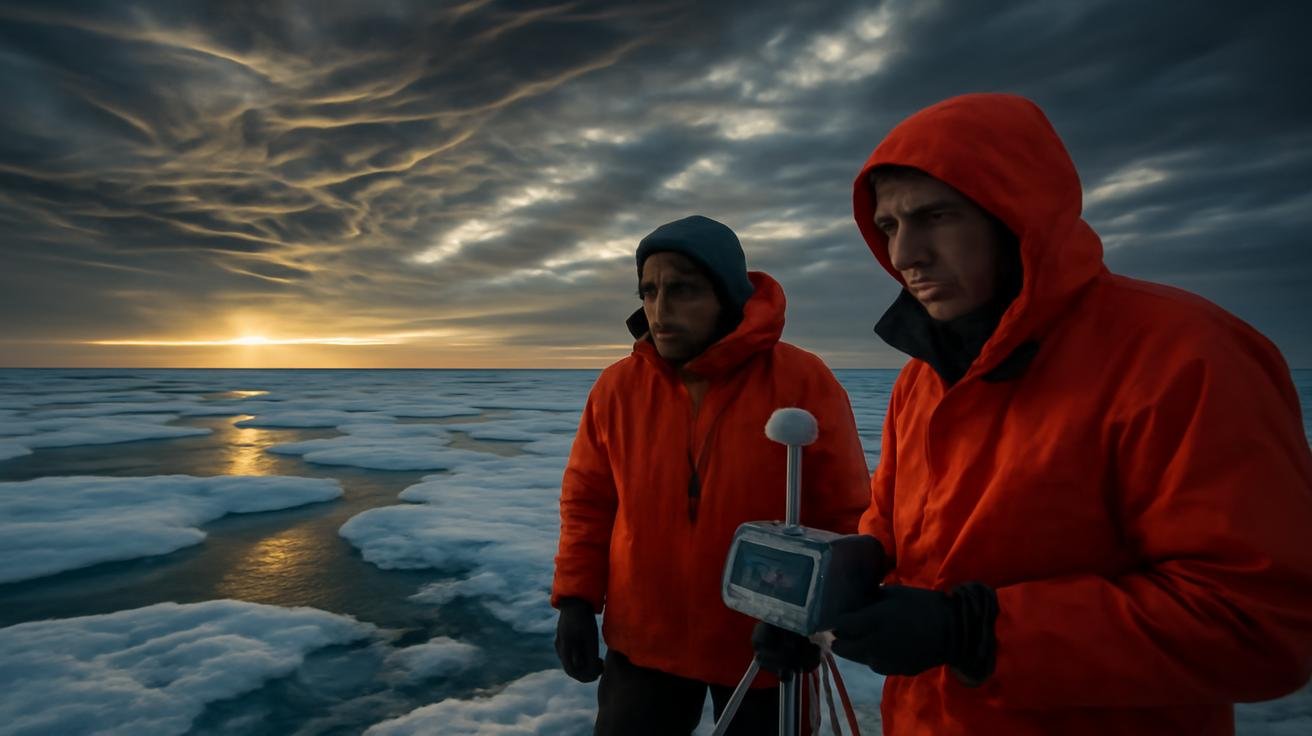
Meteorologists are closely monitoring conditions in the Arctic as early March may mark a critical turning point in the region’s atmospheric stability. Recent observations suggest that unusual shifts in temperature patterns, pressure systems, and wind circulation could influence weather far beyond the polar region.
Scientists say that what happens in the Arctic atmosphere during this period can affect weather patterns across Europe, North America, and parts of Asia, making it an important moment for global climate monitoring.
Why the Arctic Atmosphere Matters

The Arctic plays a key role in regulating the Earth’s climate. Its atmosphere interacts with ocean currents, sea ice, and large-scale wind patterns that influence the global climate system.
One of the most important elements is the polar vortex, a large area of low pressure and cold air that circulates around the Arctic. When the polar vortex is strong and stable, cold air typically remains trapped near the pole. However, when it weakens or becomes unstable, cold air can move southward into mid-latitude regions.
Meteorologists believe that the beginning of March could bring conditions that alter this delicate balance.
Signs of Changing Atmospheric Stability

Recent data from satellite observations and weather models have shown several signals that meteorologists are watching closely.
Among the key indicators are:
- Unusual temperature fluctuations in the upper atmosphere
- Shifts in pressure patterns over the Arctic
- Changes in jet stream behavior
- Variations in sea ice coverage
These factors can interact in complex ways, sometimes triggering large-scale atmospheric disruptions.
Possible Effects on Global Weather

If the Arctic atmosphere becomes unstable during early March, it could lead to significant weather changes in other parts of the world.
Potential impacts include:
- Cold air outbreaks in North America or Europe
- Stronger storms in mid-latitude regions
- Changes in precipitation patterns
- Unusual temperature swings
While such outcomes are not guaranteed, meteorologists say the conditions are worth monitoring closely.
The Role of the Jet Stream
Another critical factor linked to Arctic atmospheric stability is the jet stream, a powerful band of winds that flows high in the atmosphere.
When the Arctic warms more quickly than other regions—a phenomenon known as Arctic amplification—the jet stream can weaken or develop large waves. These waves allow cold Arctic air to travel south while warm air moves north.
This interaction can lead to more persistent weather patterns, including prolonged cold spells or extended periods of mild temperatures.
Why Early March Is a Critical Period
The transition from winter to spring is often a sensitive time for Arctic atmospheric conditions. During this period, the temperature difference between the pole and lower latitudes begins to change, which can alter wind patterns and atmospheric circulation.
Meteorologists say early March acts as a seasonal tipping point, where small changes in the upper atmosphere can lead to larger shifts in global weather behavior.
Because of this, scientists and climate researchers are carefully analyzing new data to determine whether a major shift is actually underway.
What Scientists Are Watching Next
Over the coming weeks, researchers will continue monitoring several important indicators:
- Upper-atmosphere temperature trends
- Polar vortex strength and structure
- Jet stream patterns
- Arctic sea ice conditions
Advanced climate models will also be used to predict how these factors might influence weather in the weeks ahead.
Although uncertainty remains, experts emphasize that understanding these changes is essential for improving long-term weather forecasting and climate research.
FAQ
Why is the Arctic atmosphere important for global weather?
The Arctic influences major atmospheric circulation patterns, including the polar vortex and jet stream, which affect weather across the Northern Hemisphere.
What is atmospheric stability in the Arctic?
It refers to how balanced and predictable the atmospheric circulation is around the Arctic region. Instability can cause shifts in global weather patterns.
What could happen if the Arctic atmosphere becomes unstable?
Possible effects include cold air outbreaks, stronger storms, and unusual temperature changes in regions far from the Arctic.
What is the polar vortex?
The polar vortex is a large circulation of cold air and low pressure that normally remains centered over the Arctic.
Why are meteorologists focused on early March?
Early March is a transition period between winter and spring, when atmospheric conditions can change rapidly and influence global weather patterns.