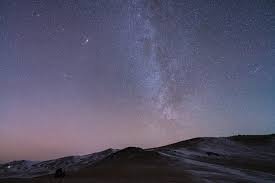
Skywatchers around the world were left amazed after a meteor streaked across the night sky at an incredible speed of more than 119,000 km/h. The spectacular event lit up the atmosphere for a few seconds, creating a bright flash that many observers described as unforgettable.
Astronomers say such high-speed meteors are not unusual in space, but witnessing one clearly from Earth remains a rare and exciting moment.
What Happened When the Meteor Entered Earth’s Atmosphere

A meteor forms when a small space rock enters Earth’s atmosphere at extremely high speed. As it travels through the air, intense friction causes the object to heat up and glow brightly.
In this recent event, the meteor traveled at approximately 119,000 kilometers per hour, producing a brilliant streak of light across the sky.
The glowing trail lasted only a few seconds, yet it was visible across a wide region. Many people reported seeing a bright flash followed by a fading trail before the object disappeared.
Why Meteors Travel at Such High Speeds

Space rocks orbit the Sun at tremendous velocities. When one of these objects crosses Earth’s path, gravity pulls it toward the planet. As a result, the object accelerates dramatically before entering the atmosphere.
Typical meteors travel between 40,000 km/h and 160,000 km/h. Because of these extreme speeds, even a small rock can produce a powerful visual effect in the sky.
Scientists explain that the brightness of a meteor depends on several factors, including:
- its size
- its speed
- the angle of entry into the atmosphere
- the composition of the rock

These elements determine how long the meteor remains visible and how bright it appears.
Difference Between Meteors, Meteorites, and Asteroids
Many people use these terms interchangeably, but they actually describe different stages of the same object.
An asteroid is a rocky object orbiting the Sun in space. When a small fragment of that object enters Earth’s atmosphere, it becomes a meteor.
If a portion of the object survives the intense heat and reaches the ground, it is then called a meteorite.
Fortunately, most meteors burn up completely before reaching the surface.
Why This Meteor Captured So Much Attention
The meteor that recently streaked across the sky attracted attention because of its extreme speed and brightness.
Observers described the event as a fireball, which is a meteor that shines brighter than most stars in the sky. Fireballs are often caused by slightly larger fragments of space debris.
Because these events happen quickly and unpredictably, witnessing one can feel like a once-in-a-lifetime experience.
How Often Do Meteors Enter Earth’s Atmosphere
Thousands of meteors enter Earth’s atmosphere every day. However, most are very small and burn up high in the atmosphere without being noticed.
Only a small number produce bright fireballs visible from the ground. Even fewer are captured on cameras or reported widely.
Meteor showers increase the chances of seeing these events. During certain times of the year, Earth passes through streams of cosmic debris left behind by comets.
How to Spot a Meteor in the Night Sky
Seeing a meteor does not require special equipment. In fact, the best way to observe them is simply by watching the sky in dark areas away from city lights.
Astronomers recommend:
- choosing a location with minimal light pollution
- allowing your eyes to adjust to the darkness
- looking toward open areas of the sky rather than the horizon
- observing during known meteor shower periods
With patience, skywatchers may witness a bright meteor streak across the sky.
Why Events Like This Fascinate Scientists
Meteors provide valuable information about the early solar system. Many of these rocks are billions of years old and contain materials from the time when planets were forming.
Studying meteorites that reach Earth helps scientists understand the composition of asteroids and the history of our cosmic neighborhood.
Even brief meteor sightings remind researchers how active and dynamic space can be.
The recent meteor that raced across the sky at more than 119,000 km/h offered a dramatic reminder of the powerful forces at work in our solar system. Although these events last only seconds, they capture the imagination of anyone lucky enough to see them.
For astronomers and skywatchers alike, every meteor sighting provides another glimpse into the fascinating world beyond Earth.
How fast was the meteor that crossed the sky?
The meteor traveled at more than 119,000 kilometers per hour, making it extremely fast compared to many other meteors.
What causes a meteor to glow in the sky?
A meteor glows because friction with Earth’s atmosphere heats the rock, causing it to burn and produce light.
Can a meteor reach the ground?
Most meteors burn up before reaching the surface, but if a fragment survives, it becomes a meteorite.
Are meteors dangerous?
Most meteors are very small and harmless because they disintegrate high in the atmosphere.
When is the best time to see meteors?
Meteor showers throughout the year offer the best chances, especially when skies are dark and clear.