
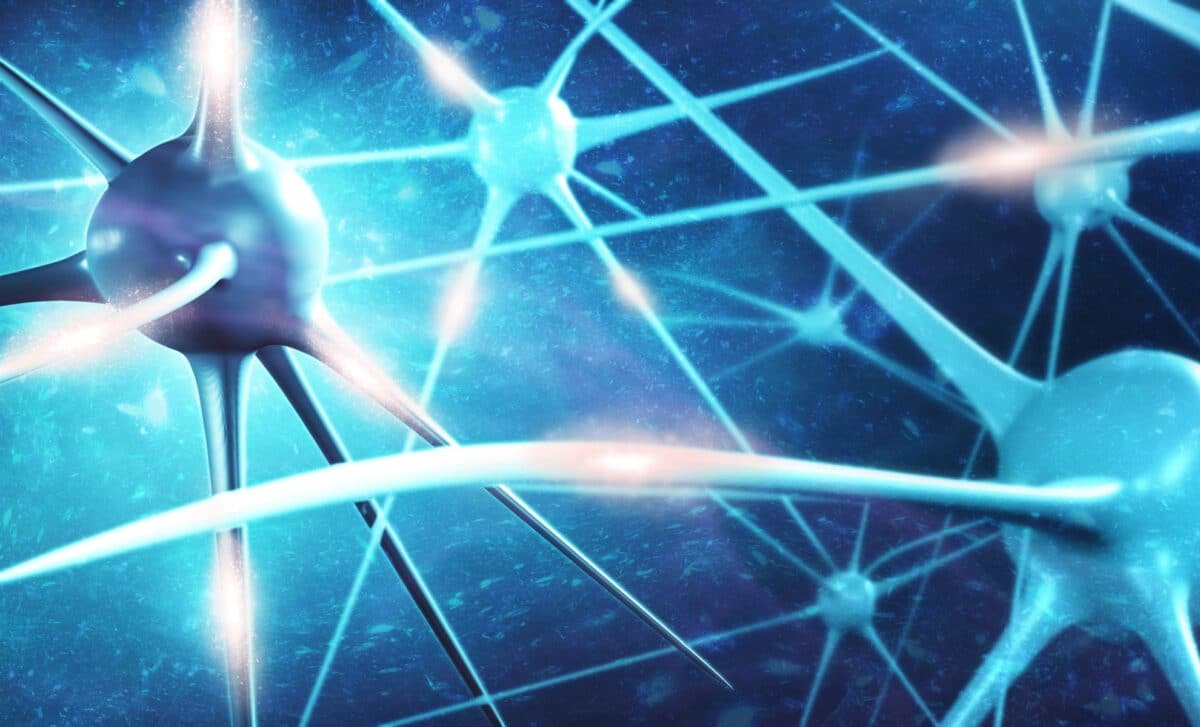
A groundbreaking scientific breakthrough has brought humanity closer to merging technology with biology. For the first time, researchers have successfully developed an artificial neuron capable of communicating with the human brain. This innovation could transform the future of neuroscience, medicine, and brain-machine interfaces.
Scientists believe this discovery could open new possibilities for treating neurological disorders, restoring lost brain functions, and developing advanced prosthetic technologies.
What Is an Artificial Neuron


A neuron is a specialized cell in the nervous system that sends electrical signals between the brain and the body. The human brain contains billions of these neurons, forming complex networks that control thoughts, movements, and emotions.
An artificial neuron is a technological device designed to imitate the behavior of biological neurons. It can send and receive electrical signals in a similar way to natural nerve cells.
Researchers have been studying artificial neurons for years, but enabling them to communicate effectively with living brain tissue has remained a major challenge.
How Scientists Achieved This Breakthrough


In the recent experiment, scientists developed a synthetic neuron capable of processing signals and interacting with biological neural networks. The device was designed to replicate the electrical patterns used by real neurons.
When connected to living brain cells in laboratory conditions, the artificial neuron successfully exchanged signals with biological neurons. This means it could both receive and transmit neural information.
The result marks a significant milestone in the field of neurotechnology.
Why This Discovery Is Important


The ability to connect artificial neurons with human brain cells could revolutionize medical treatments.
Many neurological disorders occur when neurons stop functioning properly or die. Artificial neurons may one day help restore communication within damaged neural circuits.
Possible future applications include:
- treating Parkinson’s disease
- helping patients recover from strokes
- restoring movement after spinal cord injuries
- improving advanced prosthetic limbs
Researchers believe these artificial neurons could act as bridges between damaged brain regions.
Potential Impact on Brain-Machine Interfaces
Brain-machine interfaces are systems that allow direct communication between the brain and external devices. Artificial neurons could significantly improve these technologies.
Instead of simply reading brain signals, future systems may be able to interact with the brain in real time. This would allow more natural control of prosthetic devices, computers, or medical implants.
Scientists also believe such systems could eventually help people with severe paralysis regain communication abilities.
Challenges That Still Remain
Although the breakthrough is promising, several challenges remain before artificial neurons can be widely used in medical treatments.
Researchers must ensure that these devices are:
- safe for long-term use in the human body
- compatible with complex brain networks
- capable of stable communication over time
Testing in real clinical settings will take years of additional research.
Ethical questions also arise when technology begins interacting directly with the human brain.
The Future of Neurotechnology
The development of artificial neurons represents a major step forward in neuroscience. As research continues, scientists hope to refine the technology and explore its full potential.
Future developments may lead to new treatments for brain diseases, improved prosthetics, and advanced brain-computer communication systems.
While the technology is still in early stages, the possibility of technology communicating directly with human neurons marks a new era in scientific discovery.
The creation of an artificial neuron capable of communicating with the human brain is a historic scientific achievement. By successfully connecting synthetic and biological neural systems, researchers have opened the door to revolutionary medical technologies.
Although further research is needed, this innovation could one day transform how doctors treat neurological disorders and restore lost brain functions.
What is an artificial neuron?
An artificial neuron is a device designed to mimic the electrical signaling behavior of biological neurons.
Why is this discovery important?
It may lead to new treatments for neurological disorders and improve brain-machine interface technologies.
Can artificial neurons replace damaged brain cells?
In the future, they may help restore communication between damaged neural networks.
Is this technology already used in patients?
No. It is still in early research stages and requires further testing before clinical use.
Could artificial neurons help people with paralysis?
Scientists believe they could eventually improve prosthetic control and communication systems for people with severe paralysis.