
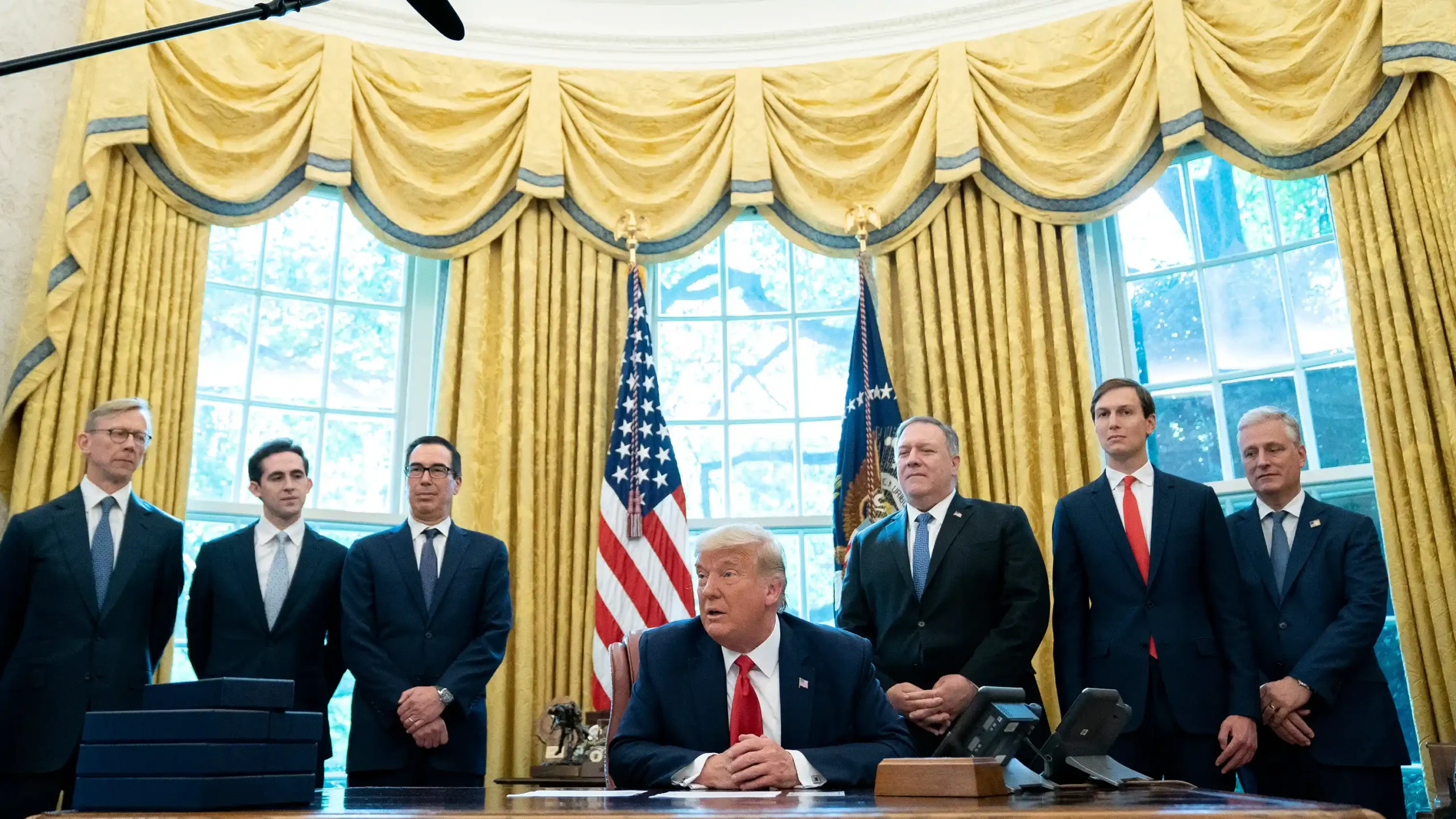
The political landscape in the Middle East has intensified after the Israeli government announced a new plan aimed at increasing its control over parts of the West Bank. The proposal quickly drew international attention and triggered a reaction from officials connected to the administration of former U.S. President Donald Trump.
Several voices from the former White House leadership have expressed opposition to the proposal. They argue that such a move could complicate diplomatic efforts and raise tensions in an already fragile region.
Israel’s New Plan for the West Bank


The government of Benjamin Netanyahu recently revealed a plan designed to expand administrative and security control in parts of the West Bank. According to officials, the proposal aims to strengthen Israel’s security presence and consolidate authority over key areas.
Supporters of the plan claim it is necessary to protect Israeli citizens and maintain stability. However, critics argue that expanding control in the West Bank could escalate tensions with Palestinians and hinder future peace negotiations.
The West Bank has remained one of the most disputed territories in the Middle East for decades. Political decisions involving the region often provoke strong international reactions.
Reaction From Trump-Era Officials


Former officials linked to the administration of Donald Trump quickly voiced concerns about the proposed expansion of control.
Some advisers believe the move could disrupt delicate diplomatic balances created during earlier negotiations. Others argue that such unilateral steps may complicate efforts to maintain long-term stability.
During the Trump presidency, the U.S. administration played a central role in reshaping Middle East diplomacy. That period saw several historic agreements and shifts in regional alliances.


Because of that legacy, many former White House voices continue to comment on developments affecting Israel and Palestinian territories.
Impact on the Israeli-Palestinian Conflict
The West Bank remains a focal point of the long-standing Israeli-Palestinian conflict. Any attempt to alter governance or territorial control in the region can have far-reaching consequences.
Analysts warn that increasing Israeli control could:
- intensify political tensions between Israel and Palestinian authorities
- provoke international criticism
- complicate peace negotiations
- influence relations with regional partners
Diplomatic observers say the situation requires careful management to prevent further escalation.
International Community Watches Closely
Governments and global organizations have been closely monitoring the developments following the announcement.
The United Nations has frequently called for restraint in actions affecting disputed territories. Many international leaders continue to advocate for negotiations that support a peaceful resolution between Israelis and Palestinians.
Diplomatic reactions may evolve as more details about the plan become available.
Political Debate Inside the United States
The announcement has also sparked discussion within U.S. political circles. Some policymakers support Israel’s right to strengthen security measures. Others believe expanding control in disputed areas risks undermining long-term diplomatic solutions.
This debate reflects broader divisions in American foreign policy discussions regarding the Middle East.
Despite differing views, most analysts agree that developments in the West Bank will remain a key geopolitical issue in 2026.
Future Outlook for the Region
Political observers believe the coming months will be critical. Decisions taken by Israeli leaders, Palestinian authorities, and international partners could shape the next phase of the conflict.
Diplomatic channels remain open, and many leaders continue to encourage dialogue rather than unilateral actions.
The situation highlights how sensitive territorial issues remain in the Middle East. Every new policy proposal carries the potential to influence regional stability and international relations.
What plan did Israel announce regarding the West Bank?
The Israeli government proposed increasing administrative and security control in certain parts of the West Bank.
Why did Trump-era officials oppose the plan?
Some former officials believe expanding control could raise tensions and complicate diplomatic efforts.
Who leads the Israeli government behind the proposal?
The plan was announced under the leadership of Israeli Prime Minister Benjamin Netanyahu.
Why is the West Bank so controversial?
The territory is disputed between Israelis and Palestinians and has been central to the conflict for decades.
What role does the international community play?
Organizations such as the United Nations often encourage negotiations and peaceful solutions regarding the region.